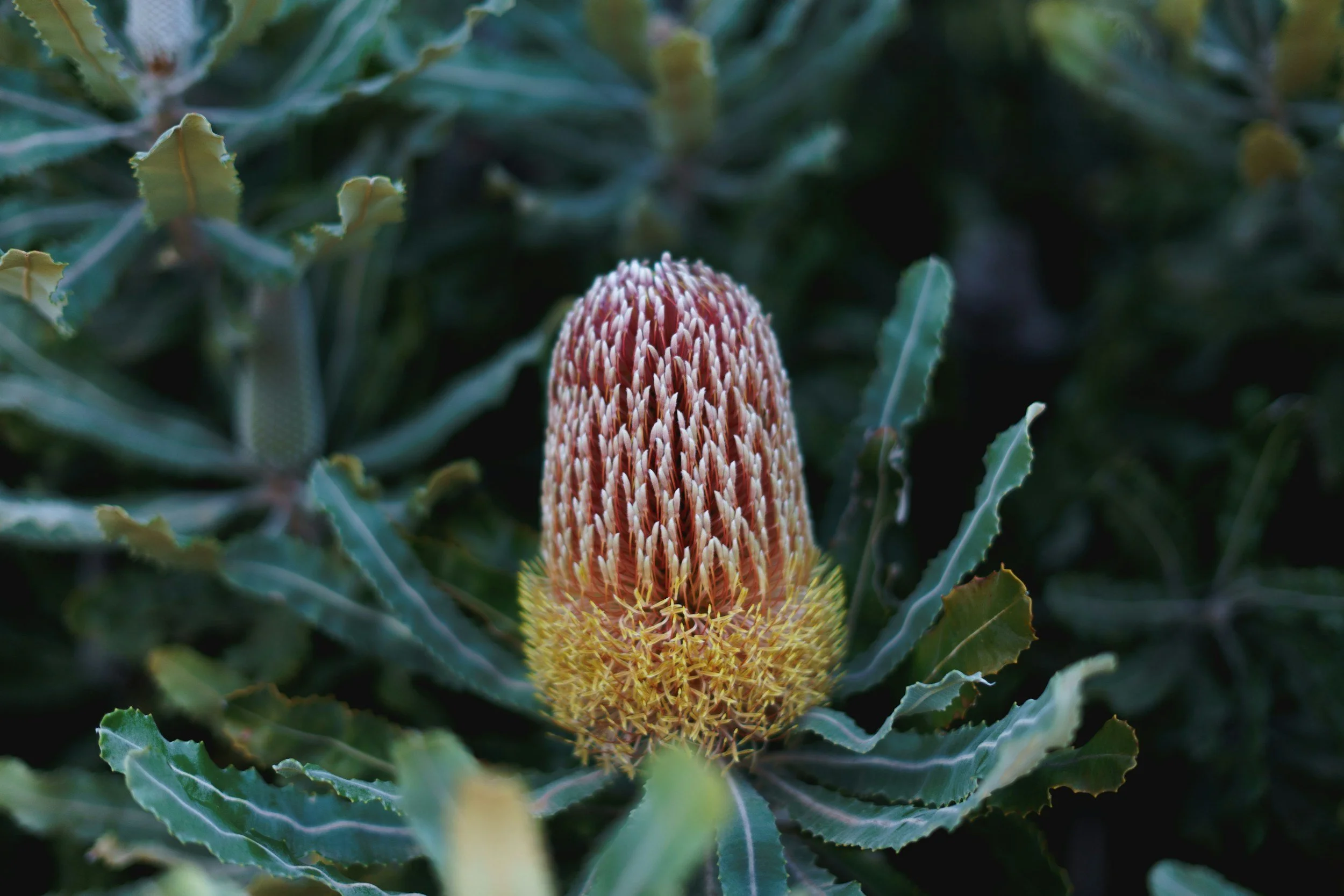
Why Banksia Mind?
I chose the Banksia, because recognising the context in which one has grown is essential to being able to connect to the present. The banksia, being an Australian native, provides a grounding reminder of the place we live and the stories this land shares with us. It is important to me to root my practice in the land that has supported my growth and becoming.
The banksia is a reminder of what is possible and necessary for life to thrive.
Banksias grow in harsh conditions. Some species are pyrophilic—their seeds remain sealed until fire cracks them open. Without burning, there is no release. This is not romanticising suffering; it's recognising that growth sometimes emerges through difficulty rather than despite it. Therapy holds a similar paradox. What feels destructive can become generative under the right conditions. The banksia is resilient and adaptive, it has an innate intelligence, to hold its seeds until the conditions are right, and from the flames of destruction, they grow in the fertile ashes of what’s been before.
This framing draws on traditions that have long turned to nature to understand the human condition. Indigenous ecological knowledge, Romantic philosophy, systems theory, phenomenology—they're all part of a conversation about how life organises and creates itself. Nature isn't merely a metaphor here; it's the greatest of teachers. From Nature we learn interdependence, reciprocity, regeneration and cycles of forever beginning anew.
Philosophical Roots
The exploration began with Hegel's concept of Aufheben—a word he used to describe a process of simultaneously negating, preserving, and elevating. It captures something essential about therapeutic change: we don't abandon who we were, we transform the relationship to it. Old patterns aren't erased; they're taken up into something larger. Like a burnt banksia opening, what was once closed becomes capable of something new.
-
The pattern loses its grip. The old form is taken apart, it no longer functions as before.
-
The original function of the pattern, its care, its protection, its intelligence, is acknowledged. What is true in the old form is not discarded but carried forward.
-
The pattern reorganises into a larger form. The same capacity that once ran as a rigid response now operates as choice. A new, more complex form emerges that contains and transcends the old.
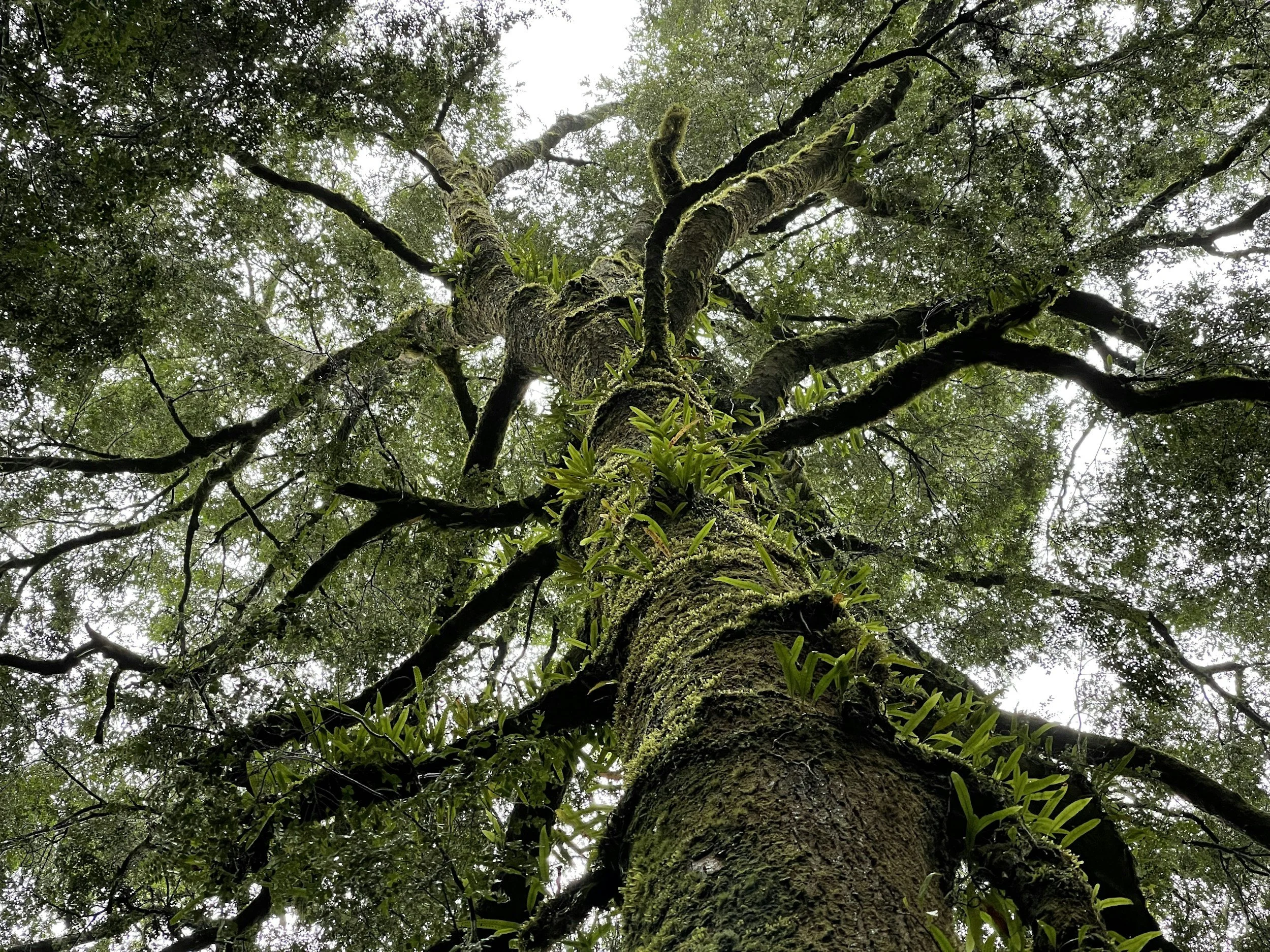
Expanding "Mind"
When I say "mind," I’m not talking about cognition alone. I’m pointing toward something closer to ecology: a multi-layered system comprising somatic, affective, cognitive, emotional, and transpersonal dimensions. These don't operate separately; they interact, feed back on each other, shift across contexts. Therapy at its best works with the whole system, not just the narrative surface.
What This Means in Practice
We work with your body’s intelligence, not just what you're thinking. I recognise that breakthrough can look like breakdown. I hold complexity rather than rushing toward resolution. And I approach each person as embedded in a living landscape…one that is shaping them while they, in turn, shape it.